The Analog Comeback: Why Younger Generations Are Choosing Physical Media
Vinyl records, film cameras, and paper journals are making a real comeback among people who grew up entirely online—here's what's driving it and what it says about how we relate to technology.
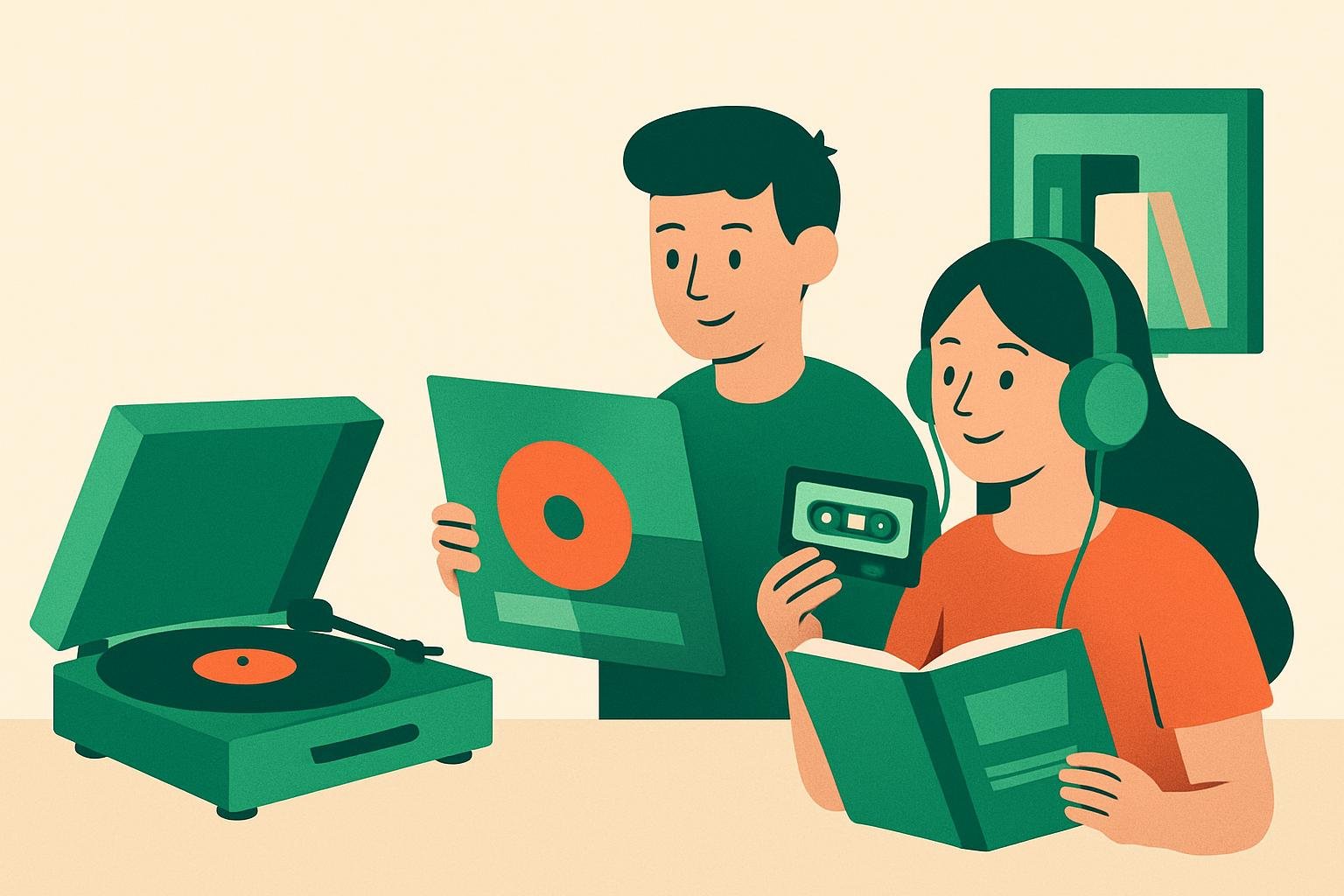
Walk into a record store on a Saturday and you’ll likely see more teenagers than nostalgic boomers. Film camera sales are climbing. Paper planners are outselling their digital rivals in certain markets. None of this is a fluke—it’s a pattern, and it says something real about how people, especially those who grew up with a smartphone in hand, are starting to relate to technology.
The Trend, Briefly
Across music, photography, journaling, and even gaming, there’s a quiet but steady shift toward physical, tangible versions of things that already exist digitally and for free. Streaming didn’t kill vinyl. Digital cameras didn’t kill film. Note-taking apps didn’t kill paper notebooks. If anything, the opposite happened: as digital versions became instant, weightless, and infinite, the physical versions became more appealing, not less.
This isn’t a rejection of technology. Most people buying vinyl still stream music daily. Most people shooting film still carry a smartphone with a far better camera in their pocket. The analog choice is deliberate, not a replacement.
Why It’s Happening Now
A few forces are converging here, and they’re worth understanding because they explain a lot about current culture, not just record shops.
Digital fatigue is real. When everything is a tap away, nothing feels special. Physical media reintroduces friction—waiting for film to develop, flipping a record over, writing by hand instead of typing—and that friction turns out to be the point. It slows an experience down enough to actually notice it.
Ownership feels different than access. Streaming gives you access to nearly everything, but you own none of it. A password change, a licensing dispute, or a shuttered app can erase your library overnight. A vinyl record or a printed photo can’t be revoked. For a generation that has watched platforms disappear, get bought out, or change their terms overnight, tangible ownership carries real weight.
Attention has become a scarce resource. Digital spaces are built to fragment focus—notifications, autoplay, infinite scroll. Physical formats don’t multitask. You can’t skip a vinyl track as easily as a Spotify song, so you end up listening to a whole album the way it was designed to be heard. That single-tasking quality is increasingly rare, and increasingly valued.
It’s a way of signaling taste and identity. A shelf of records or a stack of instant photos says something about a person in a way a phone’s camera roll never will. Physical objects are visible, shareable in person, and harder to fake. In a culture saturated with curated online personas, an actual object carries a different kind of authenticity.
It’s Bigger Than Nostalgia
It’s tempting to file this under retro cool, but the people driving much of this trend never experienced these formats the first time around. They didn’t grow up with a turntable in the living room or a darkroom down the hall. For them, this isn’t nostalgia—it’s discovery. That distinction matters, because it means the appeal isn’t rooted in longing for the past. It’s rooted in a present-day need that digital life isn’t fully meeting: a desire for slower, more deliberate, more sensory experiences.
This also shows up outside music and photography. Board games are having a resurgence alongside video games, not instead of them. Handwritten letters and printed zines circulate in niche communities as a counterpoint to instant messaging. Even cooking from physical cookbooks, rather than a phone propped against a counter, fits the same pattern: people choosing a version of an activity that asks more of their attention, on purpose.
What This Means for You
You don’t need to buy a turntable to take something useful from this trend. The underlying idea is simple: friction isn’t always the enemy. Some amount of inconvenience can make an experience more memorable, not less enjoyable.
If you’ve noticed that a habit—reading, listening to music, taking photos—feels flat or forgettable lately, the cause might not be the activity itself. It might be how frictionless and disposable the format has become. Try adding a small constraint back in: read one physical book instead of switching between five tabs, listen to a full album without skipping, take photos with a device that doesn’t let you retake the shot twenty times.
Culturally, this trend is a useful reminder that convenience and satisfaction aren’t the same thing. Technology companies optimize relentlessly for the former. People, it turns out, are increasingly optimizing for the latter on their own terms.
The analog comeback isn’t really about vinyl or film. It’s a signal that when everything becomes effortless, people start looking for ways to make a few things effortful again, on purpose.
Remember: this guide is general information, not professional advice for your specific situation. For decisions with real stakes, check with a qualified professional.