Humanoid Robots Are Quietly Starting Work in Warehouses
Humanoid robots are leaving research labs for real shifts on warehouse and factory floors, doing narrow, repetitive tasks alongside human workers. Here's what's actually happening and what it means for jobs and daily life.
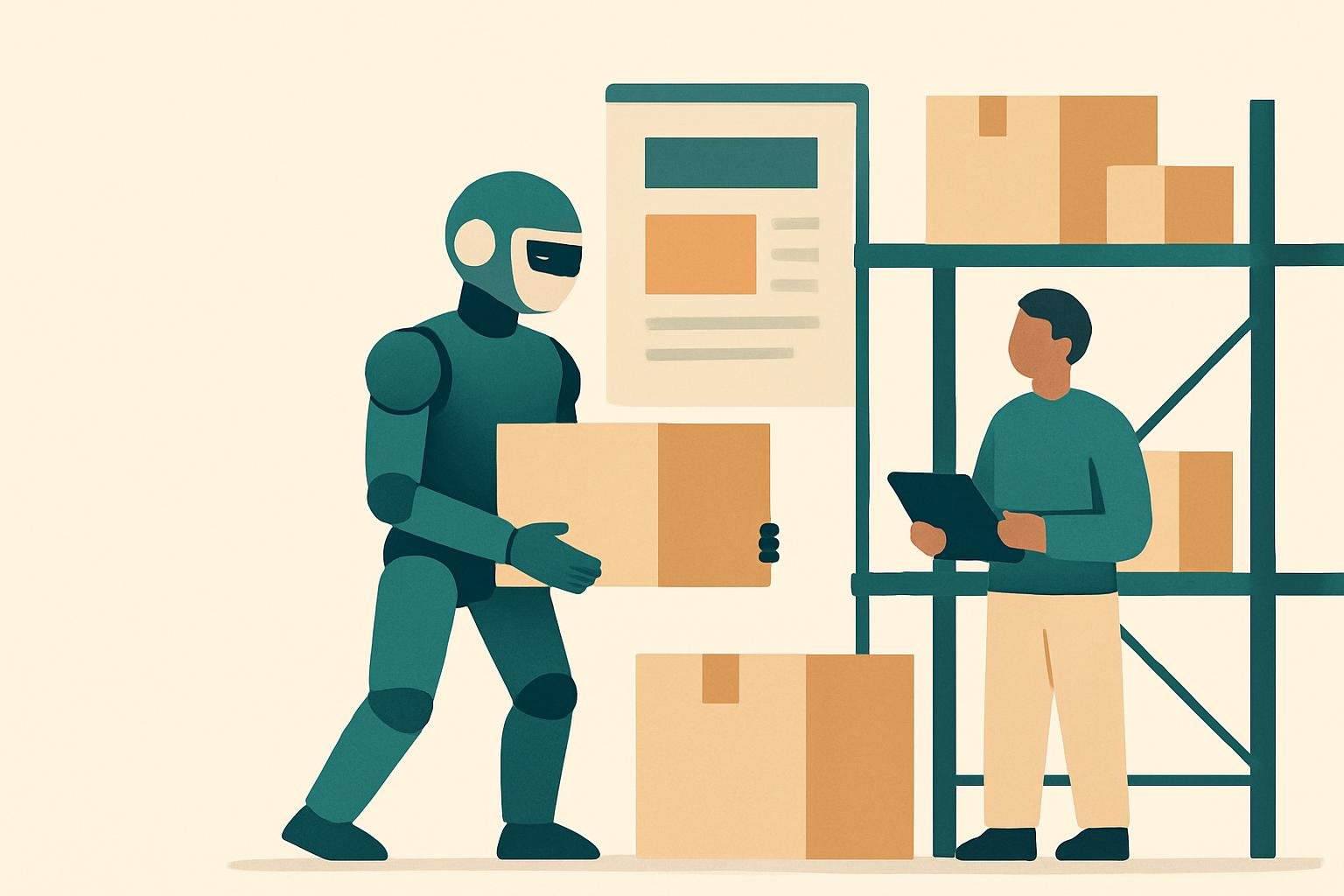
For years, humanoid robots lived mostly in demo videos: impressive backflips, awkward door-opening, the occasional viral stumble. That era is ending. A handful of companies are now placing two-legged, two-armed robots into actual warehouses and factories, where they clock real shifts moving boxes, loading trailers, and feeding parts into machines. It’s not science fiction anymore. It’s logistics.
Why Humanoid Shape at All
Warehouses and factories were built for people. Shelves sit at human reach height, walkways fit human strides, and tools are sized for human hands. A wheeled robot arm can be efficient, but it often needs the building redesigned around it. A humanoid robot, in theory, can slot into existing infrastructure without expensive retrofits.
That’s the pitch, anyway. The reality is messier: current humanoid robots are still slower and less dexterous than a skilled human worker. But they don’t need breaks, don’t get injured doing repetitive lifting, and can work night shifts without complaint. For narrow, well-defined tasks, that trade-off is starting to make economic sense.
What They’re Actually Doing Right Now
Despite the flashy demos, today’s humanoid robots aren’t doing general labor. They’re doing one or two specific jobs, repeated thousands of times:
- Moving totes (the plastic bins used in warehouses) from conveyor belts to shelves
- Loading and unloading delivery trucks
- Sorting packages by size or destination
- Feeding parts into manufacturing lines
- Inspecting products for visible defects
Notice what’s missing: complex assembly, delicate handling, or navigating unpredictable environments. Those tasks still require either specialized fixed robots or, more often, human workers. The current generation of humanoid robots earns its keep by handling the repetitive, physically taxing tasks that are hard to staff and easy to standardize.
Why Now, Not Ten Years Ago
Two things changed. First, artificial intelligence models got much better at processing visual information and planning physical movements, which means robots can now recognize objects and adjust their grip without being explicitly programmed for every scenario. Second, batteries and motors got lighter and more efficient, letting robots walk and balance for a full shift instead of a few demo minutes.
Companies building these robots have also shifted strategy. Instead of chasing a robot that can do everything, they’re targeting the highest-value, lowest-complexity tasks first: the equivalent of learning to walk before running a marathon. That focus is what’s finally getting robots out of the lab and onto loading docks.
What This Means for Warehouse and Factory Jobs
The honest answer is: it depends on the role. Jobs centered on heavy, repetitive lifting are the most exposed, since that’s exactly what these robots are built to handle first. Roles that require judgment, troubleshooting, or working with irregular materials are safer for now, because current robots struggle with anything unpredictable.
Many companies deploying humanoid robots frame it as filling gaps rather than replacing staff outright, especially in warehousing, where turnover is often high and physically demanding roles are hard to keep filled. Whether that framing holds up as the technology improves is an open question. Robots that can do one task well today are usually training grounds for robots that can do three tasks well in a few years.
What to Watch For
A few signals will tell you how fast this shift is really moving:
- Deployment scale. A single robot in a pilot program is a press release. Hundreds of robots across multiple facilities is a trend.
- Task expansion. Watch whether robots stay confined to one narrow job or start handling a wider range of tasks in the same facility.
- Cost per hour. As robots get cheaper to lease or buy, the calculation for replacing versus supplementing human labor shifts.
- Safety incidents. How robots and human workers share physical space safely will shape regulation and public trust.
The Practical Takeaway
Humanoid robots aren’t about to replace warehouse workers wholesale, but they’re no longer a lab curiosity either. They’re becoming a real, if narrow, part of the workforce in logistics and manufacturing, handling the tasks that are physically hardest to staff.
If you work in or near this industry, the useful move isn’t panic or dismissal. It’s paying attention to which tasks are being automated first, because that pattern tends to predict what comes next. The jobs most likely to stay human are the ones requiring flexibility, judgment, and the ability to handle the unexpected, exactly the things robots still struggle with. For now, that’s a meaningful and durable advantage worth building on.
Remember: this guide is general information, not professional advice for your specific situation. For decisions with real stakes, check with a qualified professional.