Decision Fatigue: Why Your Willpower Runs Out by 5 PM
Every choice you make quietly drains a limited mental resource, and by evening that shortage shapes decisions you barely notice you're making. Here's what causes decision fatigue and how to structure your day around it.
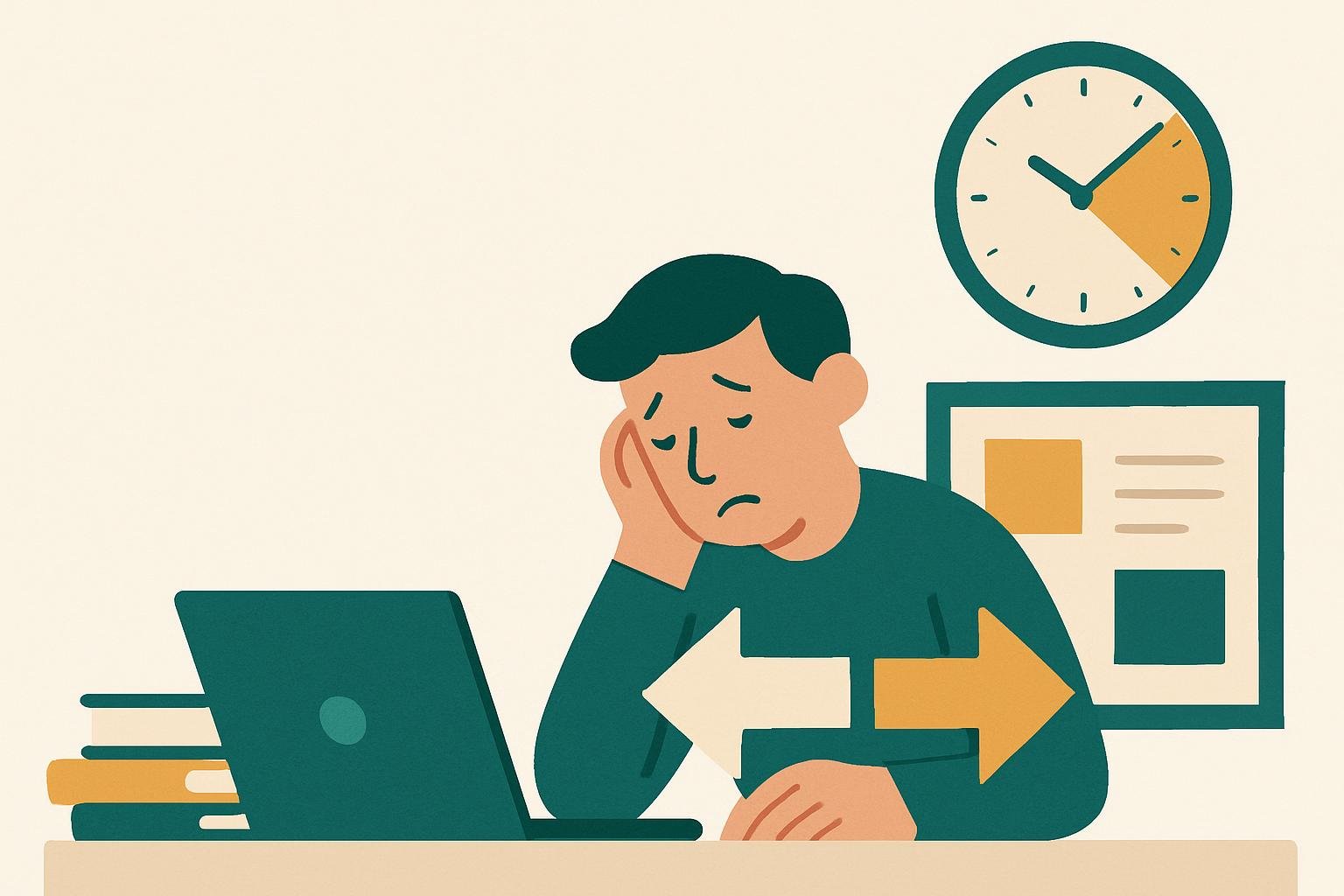
By the time evening rolls around, deciding what to eat for dinner can feel strangely exhausting. That’s not laziness. It’s decision fatigue, and it explains a lot about why smart, capable people make questionable choices later in the day.
What Decision Fatigue Actually Is
Decision fatigue describes the way your mental energy for making choices declines the more choices you make. Each decision, no matter how small, draws on the same limited pool of cognitive resources. Choosing a shirt, answering an email, picking a lunch spot, weighing in on a coworker’s idea: they all pull from the same tank.
The tricky part is that this tank doesn’t refill just because you’re moving between unrelated decisions. Your brain doesn’t distinguish between “important” and “trivial” choices when it comes to draining energy. By the afternoon, you’ve often made hundreds of tiny decisions without realizing it, and the reserve you have left for the choices that actually matter is smaller than it was at 8 a.m.
This is why so many people report feeling more impulsive, more irritable, or more likely to default to the easiest option as the day wears on. It’s also why big decisions made late in the day, like agreeing to a project scope or responding to a tense message, tend to go worse than the same decisions made in the morning.
The Telltale Signs
Decision fatigue rarely announces itself directly. Instead, it shows up as:
- Choosing the default or easiest option even when it’s not the best one
- Avoiding decisions altogether, or putting them off until tomorrow
- Feeling unusually irritable over small requests
- Impulse purchases or snacking that seem out of character
- A sense of mental fog specifically around choices, even simple ones
None of these are character flaws. They’re signs that your decision-making capacity has been spent, much like a phone battery that’s been running apps in the background all day.
Why This Matters More Than It Seems
The modern day is unusually dense with choices compared to a generation ago. Streaming services ask you to choose among thousands of shows. Grocery stores stock dozens of versions of the same product. Work often blurs into a stream of small requests, each requiring a judgment call. None of this is dramatic on its own, but the cumulative effect adds up quietly.
The practical consequence is that the quality of your decisions isn’t constant throughout the day. It’s front-loaded. Understanding that gives you a real lever: instead of trying to have more willpower, you can restructure your day so fewer decisions compete for the same shrinking resource.
Strategies That Actually Reduce the Load
Front-load your important decisions. Save meaningful choices, like negotiations, strategic calls, or anything requiring careful judgment, for the earlier part of your day when your reserve is fullest. Push routine or low-stakes tasks to the afternoon.
Build defaults for recurring choices. Decide once, then stop deciding. A rotating set of go-to meals, a standard work outfit, or a fixed morning routine removes dozens of micro-decisions from your day without lowering your quality of life. This is the same logic behind people who wear similar outfits daily: it’s not about style, it’s about conserving mental bandwidth for decisions that matter more.
Batch similar decisions together. Instead of answering emails as they trickle in throughout the day, set two or three windows to handle them all at once. Switching between different types of decisions repeatedly is more draining than making several similar ones back to back.
Reduce the menu, not just the choice. If you’re overwhelmed picking a restaurant, narrow it to three options before you even open your phone. Pre-filtering choices, whether it’s clothes, meals, or subscription plans, shrinks the mental effort required at the moment of decision.
Protect your “decision budget” from strangers’ requests. Every time someone asks you to weigh in on something small, it costs you a bit of that same reserve. It’s reasonable to defer minor requests (“Let me get back to you”) rather than answering everything the instant it lands in your inbox.
Rest actually restores it. Short breaks, a walk, or even a snack can partially replenish decision-making capacity, which is part of why negotiators and interviewers often get more favorable outcomes right after a break than right before one.
The Takeaway
You don’t have unlimited willpower, and pretending otherwise just sets you up for frustration. The more useful approach is treating good decisions like a finite resource: spend it deliberately, protect it from unnecessary drains, and build routines that remove the choices that don’t need to be choices at all. The goal isn’t to make fewer decisions in life. It’s to make sure the ones that matter get made when you actually have something left to give them.
Remember: this guide is general information, not professional advice for your specific situation. For decisions with real stakes, check with a qualified professional.