Micro-Breaks at Work: Why Tiny Pauses Recharge Focus Fast
Short, deliberate breaks during the workday can restore attention and energy more effectively than pushing through fatigue—here's what the research suggests and how to use micro-breaks well.
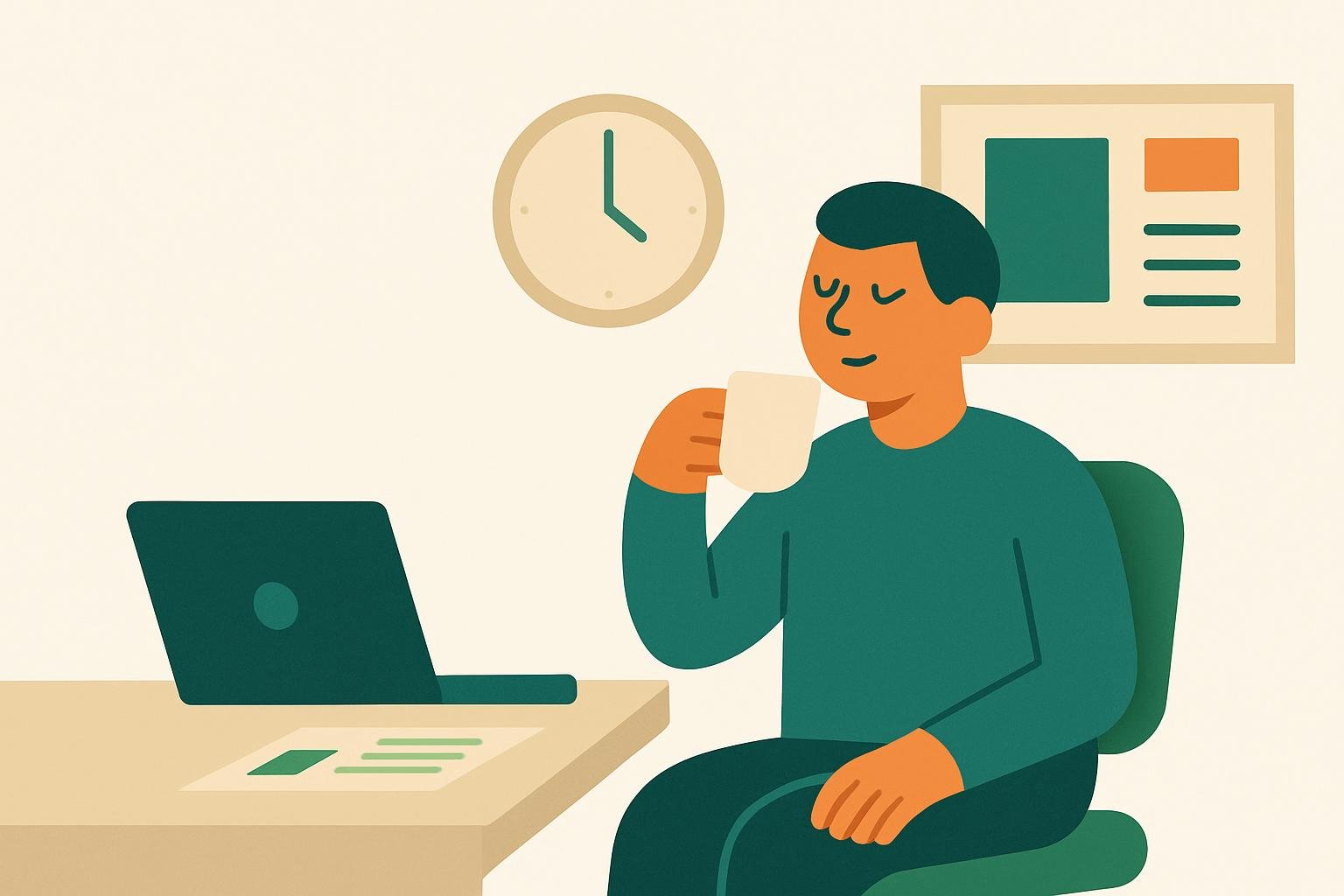
You know the feeling: an hour into a task, your focus starts to fray. Typos creep in. You reread the same sentence three times. The instinct is to push through, but a growing body of research suggests the smarter move is to stop, briefly, on purpose.
Micro-breaks are short pauses, usually somewhere between 30 seconds and five minutes, taken during a work session rather than at its edges. They’re not the same as a lunch break or a coffee run that turns into 20 minutes of scrolling. A micro-break is quick, intentional, and designed to interrupt mental fatigue before it snowballs.
Why Your Brain Needs the Interruption
Attention isn’t a bottomless resource. Cognitive scientists describe sustained focus as something that depletes with continuous use, similar to a muscle that tires from repeated effort. This is sometimes called vigilance decrement: the well-documented tendency for accuracy and reaction time to worsen the longer someone concentrates on one task without a break.
Micro-breaks seem to interrupt that decline. Stepping away, even briefly, gives the brain’s attention networks a chance to reset. Researchers who study this often point to attention restoration theory, which suggests that certain kinds of rest, particularly ones involving a shift in sensory input, help replenish the mental resources that focused work drains.
There’s also a simpler mechanical explanation. Staring at a screen or a document for an extended stretch keeps your eyes, posture, and nervous system locked in the same position. A short pause lets your body shift gears, which reduces the physical fatigue that often masquerades as mental fatigue.
What Actually Counts as a Good Micro-Break
Not all breaks are created equal. Checking email during a pause doesn’t count, because it keeps your brain in the same cognitive mode you’re trying to step away from. The most effective micro-breaks tend to share a few traits.
- They involve a change of activity. Standing up, looking out a window, or walking to get water shifts your attention away from the task.
- They’re brief but complete. A 60-second stretch that you actually finish beats a 10-minute break you spend half-distracted, still thinking about the email you just closed.
- They ideally include some movement. Even light movement, like rolling your shoulders or walking down a hallway, helps counteract the physical stiffness that builds during long stretches of stillness.
- They happen before you’re exhausted, not after. Waiting until you’re completely drained to take a break is like waiting until you’re starving to eat. The pause works better as prevention than as recovery.
Timing Matters More Than Duration
One of the more useful findings in this area is that frequency often matters more than length. A handful of short breaks spread across a few hours tends to preserve focus better than one long break taken only when fatigue has already set in.
This is part of why techniques like the Pomodoro method, which alternates focused work intervals with short breaks, have stayed popular. The specific numbers matter less than the underlying principle: work in bounded chunks, then deliberately pause before your attention collapses on its own.
For most people, a natural rhythm falls somewhere around 25 to 50 minutes of focused work followed by a break of a few minutes. But rigid formulas aren’t necessary. The more useful skill is learning to notice your own early signs of fatigue, like a wandering mind or slower reading, and treating those as a cue to pause rather than push through.
The Energy Side of the Equation
Micro-breaks don’t just protect focus, they also seem to help with energy levels throughout the day. Sustained concentration draws on the same physiological systems involved in stress response, and prolonged, uninterrupted effort can leave people feeling drained well before the workday ends.
Short pauses appear to blunt that slow drain. People who take brief, regular breaks often report feeling more energized in the afternoon than those who work straight through, even though total work time is nearly identical. The break itself doesn’t need to be restful in a dramatic sense. Even a short pause to breathe, stretch, or step outside seems to be enough to reset the system slightly before fatigue accumulates further.
Making Micro-Breaks Actually Happen
Knowing the science is one thing. Building the habit is another, especially in workplaces that reward visible busyness. A few practical anchors can help.
- Pair breaks with natural transitions, like finishing an email or wrapping up a meeting, rather than trying to remember them out of nowhere.
- Use a visible timer or calendar nudge for the first week or two, until the rhythm becomes automatic.
- Keep the break screen-free when possible. Trading one screen for another doesn’t give your attention the reset it needs.
- Treat the break as part of the work, not a departure from it. Framing it that way makes it easier to actually take without guilt.
The workday isn’t a test of endurance. It’s closer to a series of sprints, and the recovery in between is what keeps the pace sustainable. A few minutes of intentional pause, taken often enough, can do more for your focus and energy than powering through ever will.
Remember: this guide is general information, not professional advice for your specific situation. For decisions with real stakes, check with a qualified professional.